
RV Furnace & Heater Repair
Certified technicians. Every brand. Safe, accurate diagnosis you can trust.
Your RV Furnace Stopped Working. Now What?
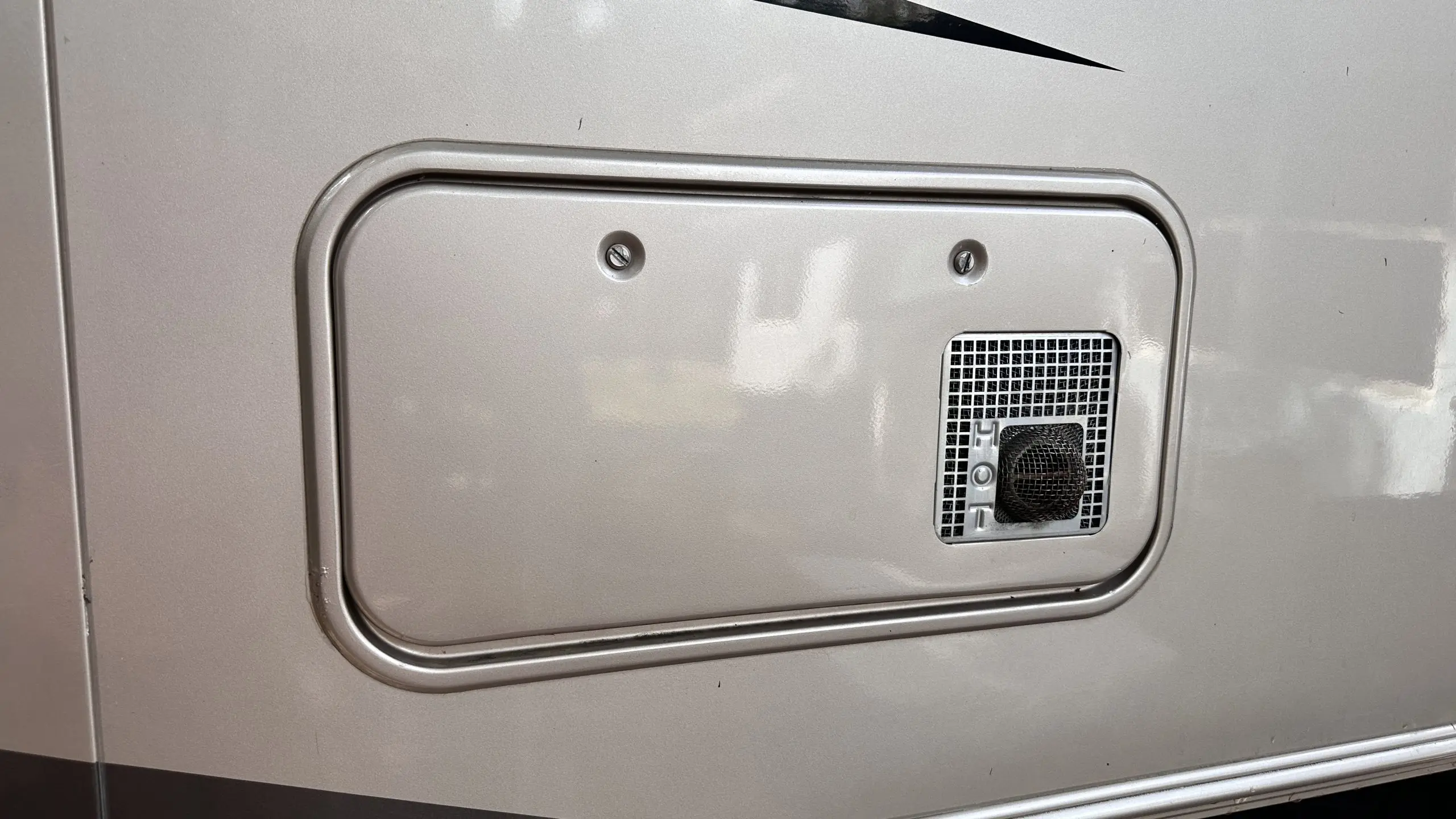
You woke up cold. Maybe the furnace clicks but never lights. Maybe the blower runs but the air stays cold. Maybe nothing happens at all when you turn up the thermostat. Whether you call it your RV furnace, your RV heater, or just "the heat", it's not doing its job and you need it fixed.
Before you start troubleshooting on your own, here's what you need to know: your RV furnace runs on propane and produces carbon monoxide. It can leak LP gas, leak CO into your living space, or overheat and cause a fire if someone guesses their way through a repair.
That's the bad news. The good news? When a certified technician maintains your furnace, it has multiple built-in safeties that work together to protect you and your family. Every furnace that leaves our shop has every one of those safeties verified and working.
One Thing You Can Safely Try
If your furnace stops working or won't ignite, try this before you call anyone:
Turn your thermostat off. Wait 30 seconds. Turn it back on.
This resets the furnace control board and clears most lockout conditions. It works the same way restarting a computer fixes many software glitches. If the furnace fires up normally, you're good to go.
If that doesn't work, call a certified technician.
RV furnaces involve propane, carbon monoxide, and high-voltage ignition. The built-in safeties are there for a reason, and a trained technician knows how to verify every one of them. Don't guess.
Common RV Furnace & Heater Problems We Fix
Won't Ignite
You hear the blower start and the igniter click, but the burner never lights. Common causes include a faulty gas valve, corroded igniter, failed control board, or battery voltage below 10.5V. On Suburban models, the gas valve sits between the blower wheels and requires specific tools to access and test.
Blows Cold Air
The blower runs but the air never warms up. This usually means the burner isn't firing. Check your propane level first, it's the most common cause. If propane is available, the problem is often a blocked air intake or exhaust (insects and debris), a failed sail switch, or a bad control board.
Cycles On and Off
The furnace lights, runs for a few minutes, then shuts off and restarts. This can be caused by a thermostat getting hit by its own duct airflow (making it think the RV is already warm), an overheating combustion chamber, or a flame sensor that isn't reading correctly.
Ignites Then Shuts Off
The burner lights but shuts down after 6 to 10 seconds. This points directly to the igniter/flame sensor circuit. The igniter doubles as the flame sensor, it generates a small voltage when heated. Corrosion on the wire between the sensor and control board is a frequent cause. The high-voltage ignition pulse gets through, but the low-voltage sense signal does not.
Blower Won't Start
Nothing happens when you turn up the thermostat. Start with the basics: is the furnace getting 12V power? Check the DC fuse panel. Then check the circuit breaker on top of the blower housing. A failed time delay relay, worn blower motor brushes, or a bad control board can also prevent the blower from starting.
Soot on Exhaust Vent
If you see black soot around the exterior exhaust vent, stop using the furnace immediately. Soot means incomplete combustion, unburned fuel is venting outside, and carbon monoxide may be entering your living space through a cracked combustion chamber. This requires professional inspection right away.
The Most Common Repair We See
More often than you'd expect, the fix is simple: the connector to the control board has oxidized.
A small amount of corrosion on the connector pins is enough to prevent the furnace from operating. Unplugging the harness connector, cleaning the contact surfaces, and plugging it back in solves the problem in many cases. It's the RV furnace equivalent of restarting your computer.
Here's something we want you to know: it has been our experience that some service centers will replace a perfectly working board when the real problem was just a corroded connector. If you're ever told your control board was bad, ask them to give you the board they took out. A good shop won't have a problem with that.
We're not here to cast shade or talk bad about other RV repair shops. We've just seen too many shortcuts where you, the customer, take the hit. You deserve better than that.
When the control board itself has genuinely failed, we replace it with a Dinosaur Electronics board. Dinosaur boards carry a better warranty than most OEM boards and are made in the USA. If you're under manufacturer warranty or prefer OEM, we install those too, your choice.
RV Furnace Types We Service
Every RV furnace (or heater, same unit, different name) falls into one of two form factors. We service both.
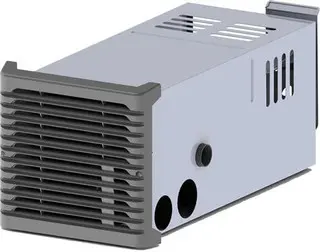
Suburban NT Series
The NT series is unique to Suburban, different footprint, different design than everything else on the market. Found in smaller travel trailers, fifth wheels, and motorhomes. Available in 10,000 to 35,000 BTU models.
Suburban is the only manufacturer that makes this style.
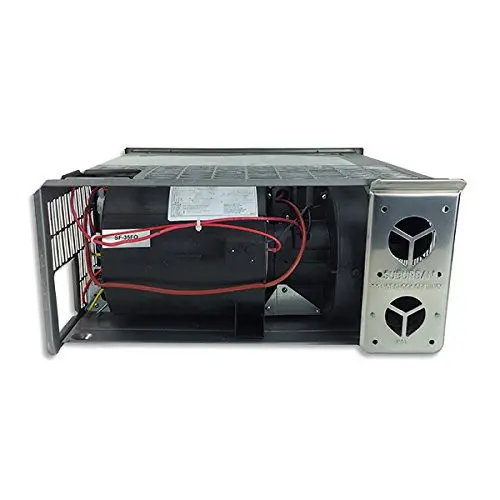
SF Series Style
This is the standard RV furnace form factor shared by Suburban SF, Atwood, Dometic, Fogatti, and others. Same basic footprint and design across all brands. Available in 16,000 to 40,000 BTU models with multiple duct connection options.
Suburban SF, Atwood, Dometic, Fogatti, all use this shared design.
What Our Technicians Check
Your RV furnace has multiple components and safety systems that must all work together. Here's what a proper diagnosis covers.
Control Board
The brain of your furnace. Controls the ignition sequence, monitors the flame sensor, and manages the blower timing. We check the board connector first (the most common failure point), then test the board itself. Replacement with Dinosaur Electronics or OEM.
Gas Valve
Opens to allow propane to the burner. We test each solenoid with a multimeter, looking for 30–50 ohm readings. An open or OL reading means the valve needs replacement. On Suburban models, the valve sits between the blower wheels and requires specific access procedures.
Igniter / Flame Sensor
One component that does two jobs, it sparks to ignite the burner, then senses the flame to confirm ignition. Corrosion on the sensor wire is a common failure. We test for proper voltage output and verify the connection back to the control board.
Sail Switch
A safety switch that confirms the blower is moving enough air before allowing the gas valve to open. If the blower spins too slowly (low battery voltage) or the sail switch fails, the furnace won't ignite. We verify both the switch and the airflow.
Blower Motor
Pushes warm air through your ducts and pulls combustion air through the burner chamber. Worn brushes, failed bearings, or a squealing motor mean it's time for replacement. We check amp draw and RPM to catch motors that are failing before they quit entirely.
Combustion Chamber & Exhaust
We inspect for cracks in the combustion chamber that could allow carbon monoxide into your living space. We also check the air intake and exhaust tubes for blockages, insects and debris are frequent culprits, especially after storage.
Bug Screens & Airflow
Bug screens on furnace intake and exhaust vents should be removed during operation. They restrict airflow, cause poor heater performance, and can lead to furnace failure.
Why Furnace Safety Matters
Your RV furnace is one of the few systems in your camper that involves both an open flame and a pressurized gas supply inside your living space. When it's working correctly, multiple safety systems keep you protected:
The sail switch prevents gas flow if the blower isn't moving enough air. The flame sensor shuts off gas if the burner doesn't light within seconds. The high-limit switch kills the furnace if the combustion chamber overheats. Your LP detector alarms if propane escapes. Your CO detector alarms if carbon monoxide enters the cabin.
These safeties are designed to work together as a system. When a certified technician services your furnace, they verify every one of them. That's what makes a properly maintained RV furnace safe.
The trouble comes when someone bypasses or ignores these safeties trying to get the furnace running. Every technician on our team is certified and trained to understand how these protections interact, and they make sure every one of them is doing its job before your RV leaves our shop.
How Much Propane Does Your RV Heater Use?
Most RV owners buy propane in 20-pound or 30-pound cylinders, so here is what your furnace burns in pounds per hour of continuous run time.
These are continuous-run numbers. In practice, your furnace does not run nonstop. A typical heating cycle runs 5 to 8 minutes, then the furnace shuts off until the thermostat calls for heat again. How long it stays off between cycles depends on the outside temperature, your desired inside temperature, and how well insulated your RV is.
Furnace size varies by RV. Some smaller campers have a single 20,000 BTU unit. Some 40-foot motorhomes have two furnaces, a 25,000 BTU and a 40,000 BTU, totaling 65,000 BTU. Your furnace BTU rating is printed on the data tag on the unit itself.
Frequently Asked Questions
Why does my RV furnace click but not ignite?
If you hear the blower start and the igniter clicking but the burner never lights, the most common causes are a faulty gas valve, a weak or corroded igniter, or low battery voltage below 10.5 volts. Try the thermostat reset first (off, wait 30 seconds, back on). If it still won't ignite, this repair involves propane and should be diagnosed by a certified technician.
Why does my RV furnace blow cold air?
If your blower runs but the air never warms up, the burner isn't firing. Check your propane level first, it's the most common cause and the easiest to overlook. If propane is available and the furnace still blows cold, the problem is usually a blocked air intake or exhaust vent, a failed sail switch, or a bad control board.
What brands of RV furnace do you repair?
All of them. Suburban (NT and SF series), Atwood, Dometic (which now owns Atwood and the Hydro Flame brand), and Fogatti. Our certified technicians are trained on every model. We stock Dinosaur Electronics replacement control boards (better warranty, made in USA) and can install OEM parts when requested or required by manufacturer warranty.
How much propane does an RV furnace use?
It depends on your furnace BTU rating. A 30,000 BTU furnace burns about 1.4 pounds of propane per hour of continuous run time. But your furnace does not run nonstop. It cycles on for 5 to 8 minutes, then shuts off until the thermostat calls for heat again. How long between cycles depends on outside temperature, your desired inside temperature, and insulation. Your BTU rating is on the data tag on the furnace.
Is it safe to repair my own RV furnace?
We recommend the thermostat reset (off, 30 seconds, back on) and nothing more. RV furnaces can leak LP gas, leak carbon monoxide into your living space, or overheat and cause a fire when repaired incorrectly. The built-in safeties are designed to protect you, but only when a trained professional verifies they're all working together. Don't guess your way through a furnace repair.
Your RV Heater Isn't Something to Guess About
Certified technicians. Accurate diagnosis. Every safety verified before your RV leaves our shop.